Institutional Knowledge Portal

Holistic Nutritional Support for Men's Well-being

An independent educational resource examining the scientific context of essential vitamins, minerals, and natural compounds in relation to men's general physiological balance.

Explore the Concepts View Natural Compounds

Educational content only. No promises of outcomes.

13 Essential Vitamins
16 Trace Minerals Studied
200+ Natural Compounds Documented
Section 1 — Foundational Concepts

Introduction to Nutritional Concepts

Nutrition science provides a structured lens through which we understand how the human body obtains, processes, and utilises the compounds necessary for its fundamental operations.

The study of nutritional biochemistry has evolved substantially over the past century. Researchers have progressively mapped the roles of discrete micronutrients, tracing their pathways from ingestion through absorption, distribution, and eventual metabolic function. For men specifically, physiological differences in body composition, hormonal environment, and metabolic rate create a distinct context for understanding how these compounds operate.

This resource approaches the topic through a purely descriptive lens, presenting the scientific consensus on how vitamins, minerals, and natural plant-derived compounds are understood to participate in the body's routine processes. No individual guidance is implied, and no specific outcomes are suggested.

Key Concepts in this Resource

  • Micronutrients — Vitamins and minerals required in small quantities but essential for physiological function.
  • Bioavailability — The proportion of a nutrient that enters systemic circulation and can be utilised by the body.
  • Phytocompounds — Naturally occurring chemical substances found in plants, studied for their biological activities.
  • Dietary Reference Values — Scientifically established guidelines describing adequate intakes of specific nutrients.
  • Nutritional Synergism — The phenomenon whereby certain nutrients demonstrate enhanced effects when present alongside complementary compounds.
  • Antioxidant Activity — The capacity of certain molecules to neutralise reactive oxygen species within biological systems.
A note on content scope: All terminology and explanatory content presented throughout this site is drawn from peer-reviewed nutritional science literature. This information is for general educational orientation and does not constitute individual dietary guidance.
Section 2 — Micronutrient Overview

Essential Vitamins for General Well-being

Vitamins are organic compounds classified by their solubility and distinct biochemical roles. The following overview describes the major vitamins studied in the context of men's general physiological function, based on established nutritional research.

Fat-Soluble

Vitamin D

Synthesised in the skin upon UV-B exposure and found in select dietary sources. Participates in calcium metabolism, skeletal mineralisation, and a broad range of cellular signalling processes. Northern European latitudes, including Germany, present particular conditions for studying seasonal variation in circulating levels.

Fat-Soluble

Vitamin E

A group of eight related tocopherol and tocotrienol compounds, alpha-tocopherol being the most biologically studied. Recognised in nutritional science for its role in protecting cell membranes from oxidative processes. Present in nuts, seeds, and vegetable oils.

Water-Soluble

Vitamin C

An essential water-soluble compound that the human body cannot synthesise endogenously. Widely documented as a cofactor in collagen biosynthesis and a participant in immune system function. Abundant in fresh citrus fruits, bell peppers, and leafy greens.

B-Complex

B-Vitamin Group

Eight distinct water-soluble vitamins — including B1 (thiamine), B2 (riboflavin), B3 (niacin), B6 (pyridoxine), and B12 (cobalamin) — collectively involved in energy metabolism, red blood cell formation, and neurological function. Each has a unique dietary profile and absorption mechanism.

Fat-Soluble

Vitamin A

Obtained directly (retinol from animal sources) or as provitamin A carotenoids from plant foods. Extensively studied in relation to vision, immune response, and epithelial tissue integrity. The balance between adequate intake and excessive amounts has been a subject of considerable scientific scrutiny.

Fat-Soluble

Vitamin K

A family of structurally related fat-soluble compounds (K1 from leafy greens, K2 from fermented foods and synthesis by gut flora). Principally documented for its role in the coagulation cascade and, more recently, in bone protein carboxylation processes.

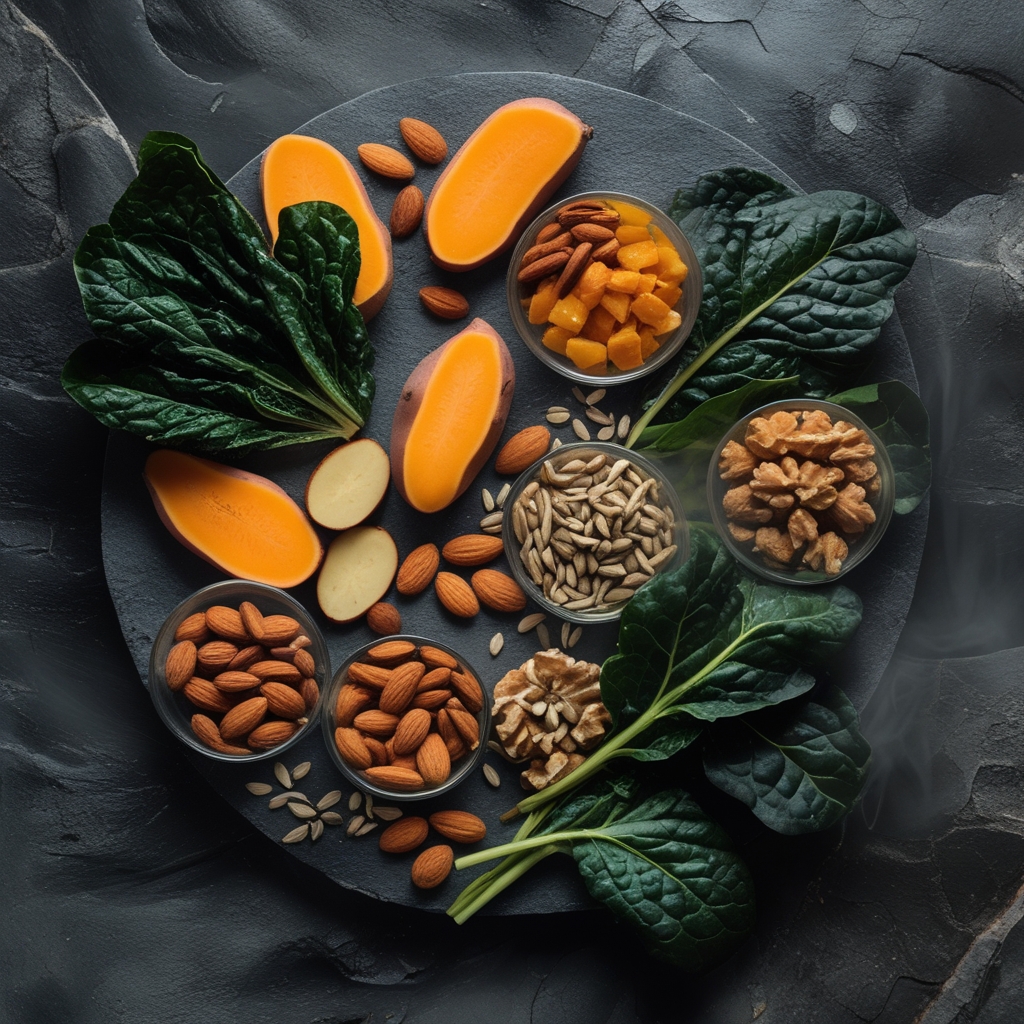
Overhead view of a carefully arranged selection of natural whole foods rich in vitamins including dark leafy greens, orange sweet potatoes, almonds, walnuts, and sunflower seeds on a dark stone surface with warm directional lighting
Section 3 — Trace Elements

Minerals and Trace Elements

Beyond vitamins, the human body requires a range of inorganic elements for structural and regulatory functions. These are broadly divided into macrominerals (required in larger quantities) and trace elements (required in minute amounts). The distinction is quantitative, not indicative of relative importance.

Macrominerals

Calcium, magnesium, phosphorus, sodium, potassium, chloride, and sulphur constitute the principal macrominerals. Calcium is the most abundant mineral in the body, with over 99% residing in bone and tooth tissue. Magnesium participates as a cofactor in over 300 documented enzymatic reactions, reflecting its broad systemic relevance. Phosphorus is integral to adenosine triphosphate (ATP), the body's primary energy currency molecule.

Key Trace Minerals in Men's Nutritional Context

Zinc is perhaps the most extensively studied trace mineral in relation to male physiology. It participates in the catalytic activity of approximately 300 enzymes and is involved in gene expression regulation. Rich dietary sources include oysters, beef, pumpkin seeds, and legumes.

Selenium is an essential component of selenoproteins, a distinct class of proteins with important antioxidant and thyroid-regulating functions. Soil selenium content varies considerably across geographical regions, directly affecting food-based intake.

Iron exists primarily as haem iron in animal products and non-haem iron in plant sources. Its central role in haemoglobin formation and oxygen transport throughout the body is well established. Absorption efficiency is modulated by vitamin C co-ingestion and inhibited by certain polyphenols and phytates.

Manganese, Copper, and Chromium

Manganese acts as a cofactor for superoxide dismutase, an antioxidant enzyme, and participates in bone formation and carbohydrate metabolism. Copper is involved in iron metabolism, connective tissue synthesis, and neurological function. Chromium's role in carbohydrate and lipid metabolism has been studied, though the precise mechanisms remain a subject of ongoing scientific investigation.

Iodine and Molybdenum

Iodine is an indispensable component of thyroid hormones, which regulate metabolic rate, growth, and development. Its primary dietary source in Germany, as in much of Europe, is iodised table salt and sea fish. Molybdenum, present in legumes, grains, and leafy vegetables, acts as a cofactor for several enzymes involved in sulphur amino acid catabolism.

Informational Context

This content is for informational purposes only and does not constitute individual medical or health advice. The information presented explores various approaches to well-being and should not replace personal decisions or professional consultations.

Section 4 — Traditional Plant Knowledge

Herbal Extracts and Their Traditional Uses

Throughout recorded history, cultures across every inhabited continent have systematically documented the properties of plant-derived compounds. Modern phytochemistry has begun to examine the mechanisms underlying many of these observations, bridging ethnobotany with contemporary biochemical analysis.

Close-up of ashwagandha plant root system with dried orange-red berries and pale grey-brown textured roots laid on a weathered wooden surface, warm amber sidelight casting long shadows
Withania somnifera

Ashwagandha

Classified within the Solanaceae family, Withania somnifera is a perennial shrub native to the dry regions of the Indian subcontinent and parts of North Africa. Its root has been a central component of Ayurvedic practice for several millennia, referenced in classical Sanskrit texts as a general adaptogenic tonic.

The plant contains a group of steroidal lactones known as withanolides, along with alkaloids, saponins, and iron. Contemporary phytochemical research has focused on characterising these constituents and understanding their interactions with mammalian biological systems. Studies have examined the root extract's relationship with stress-response pathways, including the hypothalamic-pituitary axis and cortisol regulation.

  • Traditional forms: dried root powder, decoctions, herbal preparations
  • Geographic origin: Indian subcontinent, Mediterranean, North Africa
  • Primary studied constituents: withanolides, sitoindosides, ashwagandhine alkaloids
Ginseng roots with forked humanoid shape and wrinkled beige-brown skin displayed on aged parchment paper with a small ceramic bowl and dried botanical elements, cinematic overhead lighting with deep background shadows
Panax ginseng

Panax Ginseng

The genus name Panax derives from the Greek word meaning "all-healing," reflecting the plant's revered status in East Asian traditional knowledge systems, particularly within Korean and Chinese herbal practices spanning over two thousand years. The slow-growing perennial root is distinguished by its content of triterpenoid saponins collectively termed ginsenosides.

Over 30 individual ginsenosides have been isolated and characterised, each exhibiting distinct pharmacokinetic properties. Research literature has examined ginsenoside interactions with steroid hormone receptors and their influence on nitric oxide synthesis pathways. The root is typically cultivated for a minimum of six years before harvest to achieve desired constituent concentrations.

  • Traditional forms: raw root, dried slices, tinctures, standardised extracts
  • Geographic origin: mountainous regions of Korea, China, and eastern Russia
  • Primary studied constituents: ginsenosides Rb1, Rg1, Re, Rd; panaxosides
Wide flat lay of diverse dried medicinal herbs and botanicals including rhodiola rosea root sections, maca powder in a small wooden bowl, green tea leaves, and various dried berries arranged on a dark slate surface with cinematic directional light from the left
Additional Botanicals

Rhodiola, Maca, and Green Tea

Rhodiola rosea grows in the cold, mountainous regions of Europe and Asia. Its root contains rosavins and salidroside, compounds studied for their relationship with serotonin and dopamine receptor pathways. It features prominently in Siberian and Scandinavian folk medicine traditions.

Lepidium meyenii (Maca) is a cruciferous plant originating from the high Andean plateau of Peru, cultivated above 4,000 metres altitude. Its hypocotyl (the thick, fleshy root structure) is a recognised food staple in the region and has been studied for its alkaloid content, particularly macamides and macaenes.

Camellia sinensis (Green Tea) provides a rich source of catechins, particularly epigallocatechin gallate (EGCG), one of the most extensively studied polyphenol compounds in contemporary nutritional research. The relationship between catechin intake and various biological markers has generated a substantial body of peer-reviewed literature.

  • Rhodiola: Siberia, Scandinavia, the Alps — key constituent salidroside
  • Maca: Peruvian Andes — macamides, benzylglucosinolates
  • Green Tea: East and Southeast Asia — EGCG, theanine, caffeine
Section 5 — Diet & Lifestyle Context

The Role of Diet and Lifestyle

Aerial view of a wooden dining table set with a Mediterranean-style spread of whole grain bread, roasted vegetables, olive oil in a glass bottle, fresh herbs, and legumes in ceramic bowls, warm natural daylight from a window casting soft shadows

The history of nutritional science reflects a broadening understanding of how diet, physical activity, sleep, and environmental context collectively shape physiological function. Below is a structured timeline of key developments in nutritional understanding relevant to men's well-being.

Early 20th Century

Discovery of Vitamins

Between approximately 1900 and 1940, scientists identified and isolated the major vitamins, establishing that certain diseases resulted from dietary deficiencies of specific organic compounds. This era transformed nutritional science from empirical folk knowledge into a systematic biochemical discipline.

Mid-20th Century

Mineral Biochemistry Advances

Researchers characterised the precise roles of trace minerals including zinc, selenium, and chromium in enzymatic function. Large-scale epidemiological studies began linking dietary patterns with long-term physiological outcomes in populations.

1970s – 1990s

Antioxidant Research Emerges

The free radical theory of biological ageing and the concept of oxidative stress became central topics in nutritional research. Vitamins C and E, beta-carotene, and selenium gained attention for their documented antioxidant properties. This period saw significant growth in population-based dietary studies.

2000s – 2010s

Phytonutrient Science Expands

Advances in analytical chemistry enabled detailed characterisation of plant-derived compounds. The Mediterranean dietary pattern and similar whole-food approaches accumulated substantial epidemiological evidence. Nutrigenomics emerged as a field examining interactions between dietary components and gene expression.

2010s – Present

Systems Nutrition and Microbiome Research

Contemporary nutritional science increasingly examines the interplay between diet, gut microbiota composition, and broader systemic function. Personalised nutrition approaches, informed by genomic and metabolomic data, represent the current frontier, though their practical application remains an active area of investigation.

Section 6 — Physiological Mechanisms

Understanding Nutrient Absorption

The journey of a nutrient from dietary intake to cellular utilisation involves a series of distinct physiological steps, each subject to modulation by multiple factors. Understanding this process contextualises why nutrient adequacy cannot be assessed by intake alone.

Ingestion and Mastication

Physical breakdown of food through chewing increases surface area for enzymatic action. Salivary amylase initiates carbohydrate digestion; fat-soluble vitamins require food-based lipid for micellar solubilisation.

Gastric Processing

Hydrochloric acid in the stomach denatures proteins, activates pepsin, and facilitates the ionisation of mineral salts. Gastric acid levels significantly affect the bioavailability of calcium, iron, zinc, and vitamin B12.

Small Intestinal Absorption

The primary site of nutrient uptake. Absorptive enterocytes lining the duodenum and jejunum possess specific transporter proteins for most vitamins and minerals. Fat-soluble nutrients require bile acid emulsification and incorporation into chylomicrons for lymphatic transport.

Hepatic First-Pass Processing

Water-soluble nutrients absorbed via the portal vein are processed by the liver before systemic distribution. The liver regulates circulating levels of vitamin A, vitamin D metabolites, and several minerals through storage and regulated release mechanisms.

Systemic Distribution and Cellular Uptake

Nutrients are transported via blood plasma, often bound to specific carrier proteins (e.g., transferrin for iron, retinol-binding protein for vitamin A). Cellular uptake is mediated by membrane receptors and intracellular transport mechanisms that vary by tissue type.

Factors Modulating Absorption Efficiency

Food Matrix

The physical and chemical structure of food influences nutrient release and subsequent absorption efficiency.

Nutrient Interactions

Some nutrient pairs enhance absorption (e.g., vitamin C and non-haem iron), while others compete for the same transport mechanisms.

Age-Related Changes

Gastric acid secretion, intestinal transit time, and transporter expression can all shift with advancing age, affecting mineral and vitamin uptake.

Gut Microbiota

Intestinal bacteria participate in vitamin K synthesis and influence the bioavailability of several minerals through fermentation and pH modulation.

Genetic Variants

Single nucleotide polymorphisms in genes encoding nutrient transporters and metabolising enzymes can meaningfully influence individual absorption kinetics.

Timing and Meal Composition

The presence of dietary fat, protein, and fibre in a meal substantially affects the rate and completeness of co-ingested nutrient absorption.

Section 7 — Critical Analysis

Common Misconceptions About Supplements

Public understanding of nutritional supplementation is frequently shaped by oversimplification or misinterpretation of scientific data. The following addresses several of the most pervasive inaccuracies, drawing on the current evidence base.

Misconception

"More is always better when it comes to vitamins"

Scientific Context

Fat-soluble vitamins (A, D, E, K) are stored in body tissues and can accumulate to levels associated with adverse effects. Upper tolerable intake levels (ULs) have been established for most vitamins and minerals precisely because excess intake presents distinct concerns. Water-soluble vitamins, while generally excreted more readily, also carry upper limits beyond which adverse outcomes have been documented in clinical studies.

Misconception

"Natural supplements are always safe because they are from plants"

Scientific Context

Many potent toxins known to science are of plant origin. "Natural" is a descriptor of source, not of safety profile. Concentrated herbal extracts may interact with enzymatic pathways affecting how other compounds are processed by the body. Additionally, quality control in herbal product manufacturing can vary considerably, affecting consistency of active constituent concentrations.

Misconception

"A healthy diet makes supplementation completely unnecessary"

Scientific Context

Certain nutrients present legitimate challenges for dietary sufficiency in specific contexts. Vitamin D is a notable example in northern European populations, where UVB radiation is insufficient for cutaneous synthesis during winter months. Those following exclusively plant-based diets face well-documented challenges in obtaining adequate B12, which is found reliably only in animal-derived foods. Individual absorption differences further complicate generalised dietary recommendations.

Misconception

"Supplement labels accurately reflect what is inside the product"

Scientific Context

Independent laboratory analyses of commercially available dietary supplements have repeatedly identified discrepancies between labelled and measured constituent concentrations. In the European Union, including Germany, nutritional supplements are regulated as food products rather than pharmaceutical products, meaning pre-market efficacy and quality verification requirements differ substantially from those applied to registered pharmaceutical compounds.

Misconception

"Short-term supplementation can rapidly correct long-standing nutritional deficits"

Scientific Context

Repletion kinetics vary considerably by nutrient. Iron stores, measured as serum ferritin, may require months of sustained supplementation to normalise following significant depletion. Bone mineral density changes occur over years. Individual absorption rates, underlying physiological status, and concurrent dietary patterns all influence the trajectory of any repletion process.

Section 8 — Scientific Context

Scientific Research and Methodologies

48,000+ Peer-reviewed studies on vitamin D published in the past decade
300+ Enzymatic reactions requiring magnesium as a cofactor
17,000+ Published randomised controlled trials in nutritional science since 2000
30+ Individual ginsenoside compounds characterised in Panax ginseng root
Scientific research laboratory setting with glass beakers, analytical instruments, and botanical plant extracts in small glass vials arranged on a stainless steel workbench, cool blue-white laboratory lighting with selective warm accent illumination

"The strength of nutritional evidence is evaluated through systematic reviews and meta-analyses synthesising data across multiple independent research populations."

Research Methodology Hierarchy in Nutritional Science

01

Systematic Reviews & Meta-Analyses

Highest level of evidence; synthesises findings across multiple independent studies to identify consistent patterns.

02

Randomised Controlled Trials

Controlled experimental design; the gold standard for establishing cause-and-effect relationships in nutritional interventions.

03

Prospective Cohort Studies

Tracks large populations over time; effective for identifying associations between dietary patterns and long-term outcomes.

04

In Vitro & Animal Studies

Foundational mechanistic research; provides hypotheses for human study but does not independently demonstrate human-relevant outcomes.

Section 9 — Frequently Asked Questions

Frequently Asked Questions

The following questions reflect common areas of inquiry encountered in nutritional education contexts. Answers aim to provide factual, evidence-grounded orientation without constituting personal guidance.

What is the difference between fat-soluble and water-soluble vitamins?

Fat-soluble vitamins (A, D, E, and K) require dietary fat for intestinal absorption and are stored in liver and adipose tissue. This storage capacity means they can accumulate over time. Water-soluble vitamins (the B-vitamin group and vitamin C) dissolve in water, are not significantly stored, and excess amounts are generally excreted via the kidneys. This solubility difference has practical implications for both dietary planning and the context of high-dose supplementation.

Why might men have different nutritional considerations than women?

Several physiological factors differentiate nutritional contexts between biological sexes. Men typically have greater average body mass and lean muscle proportion, which affects basal metabolic rate and absolute nutrient requirements. Hormonal environments differ substantially, influencing zinc metabolism and certain B-vitamin pathways. Men do not experience the blood losses associated with menstruation, meaning iron requirements are generally lower in adult males. Conversely, men are statistically less likely to seek routine nutritional assessment, which may affect awareness of individual status.

How are Dietary Reference Values (DRVs) established?

Dietary Reference Values are established by scientific bodies, including the European Food Safety Authority (EFSA) for EU member states, through systematic review of available human studies. The process typically identifies the average requirement for a nutrient, then adds a safety margin based on population variability to establish a reference intake applicable to most healthy individuals. Tolerable upper intake levels are derived from studies identifying the lowest dose at which adverse effects have been observed, with an uncertainty factor applied.

What does "bioavailability" mean in practical terms?

Bioavailability refers to the fraction of an ingested nutrient that reaches systemic circulation in a form that can be utilised by tissues. A nutrient may be present in a food or supplement at a stated amount, but the proportion actually absorbed and used can vary substantially. For example, the iron in spinach is present as non-haem iron with relatively modest bioavailability, whereas haem iron from animal sources is absorbed more efficiently. The form a nutrient takes in a supplement (e.g., magnesium oxide versus magnesium glycinate) also affects its absorption profile.

What is an adaptogen and how is the term used in nutritional science?

The term "adaptogen" was coined in the mid-20th century by Soviet pharmacologist Nikolai Lazarev to describe substances that were proposed to increase nonspecific resistance to stress. In contemporary nutritional science, the term is applied to a group of botanicals, primarily including Panax ginseng, Withania somnifera, and Rhodiola rosea, which are being studied for their relationship with the hypothalamic-pituitary-adrenal axis. The classification remains a descriptive rather than pharmacological category, and research into the specific mechanisms of proposed adaptogenic compounds is ongoing.

How does age affect nutritional requirements?

Ageing is associated with several physiological changes relevant to nutrition. Gastric acid secretion commonly decreases with age, which can reduce the absorption of vitamin B12, calcium, iron, and zinc. The skin's efficiency in producing vitamin D from sunlight exposure diminishes over time. Kidney function changes may affect vitamin D activation and mineral excretion. Reduced appetite or dietary variety in older populations can affect overall nutrient intake. European dietary guidelines typically specify age-stratified reference values to account for these documented shifts in physiological requirements.

Continue Exploring

Deepen Your Understanding

This resource covers a broad landscape of nutritional concepts. Explore specific categories of natural compounds, learn about this educational initiative, or reach out with content-related inquiries.

Educational content only. No promises of outcomes.